

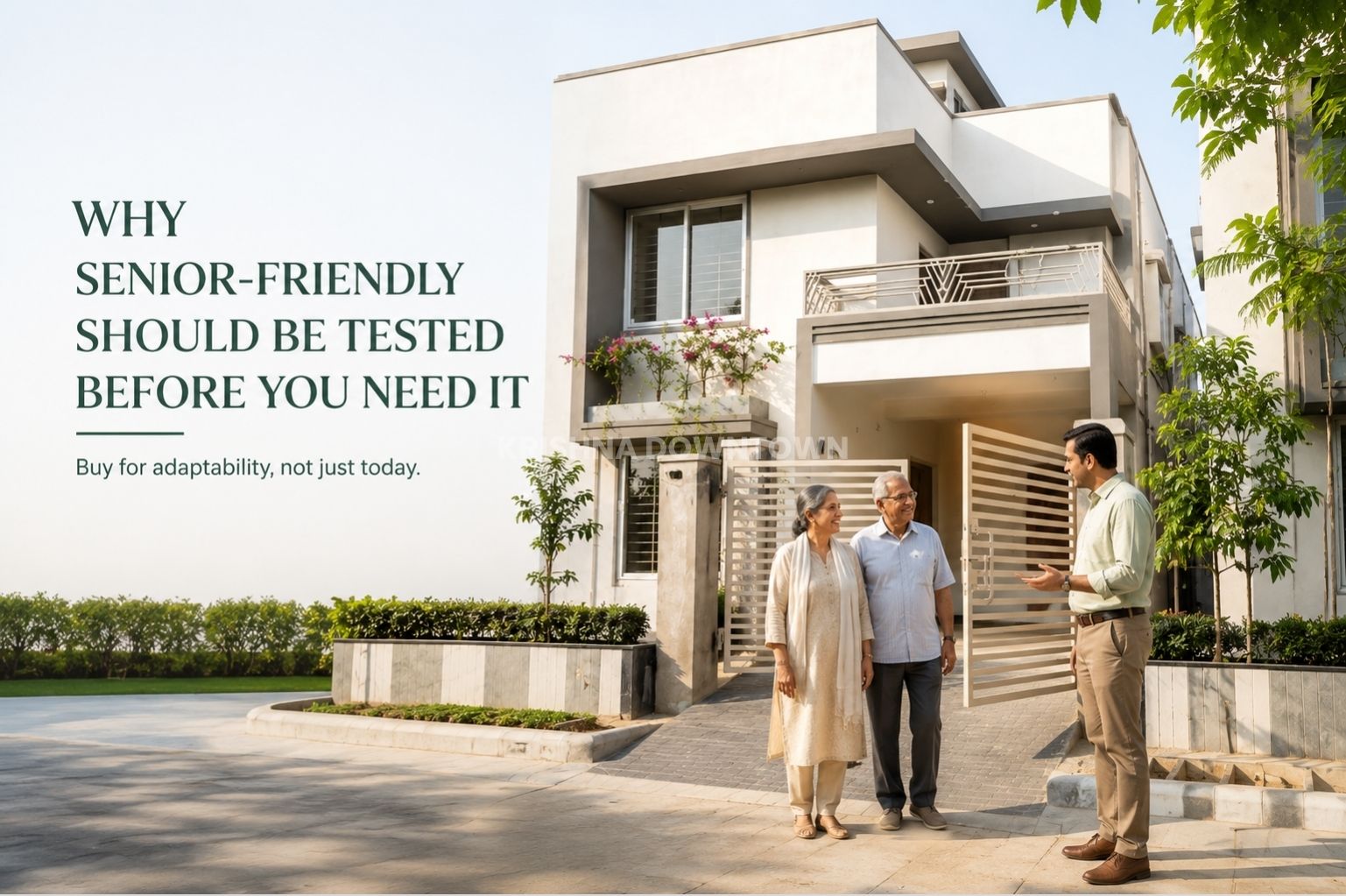
When families search for a villa for parents, they often focus on the present: “My father can use stairs now,” “My mother walks every morning,” or “We can add a grab bar later.” Those observations may be true. But the smarter purchase question is not whether the house works today; it is how difficult and expensive it would be to adapt if needs change.
A flexible home does not assume weakness. It simply reduces avoidable dependence. A ground-floor bedroom may allow parents to keep their routine without using stairs every time. A level entrance helps with luggage, a temporary injury, a stroller or a wheelchair alike. Better lighting supports every generation. This is why universal design is useful even when no one currently has a mobility limitation.
For buyers comparing a family villa in Bhubaneswar, the most useful approach is to inspect each feature in person, with the parents who may actually live there whenever possible.
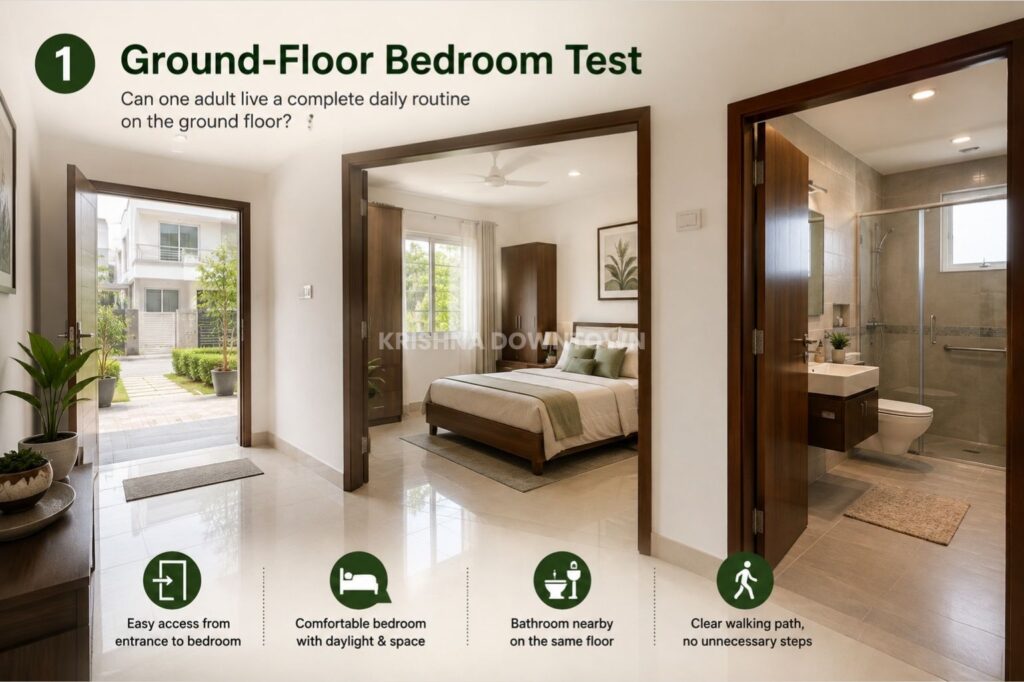
For a duplex villa, the first question is simple: Can one adult live a complete daily routine on the ground floor if climbing stairs becomes inconvenient? A bedroom alone is not enough. Check whether a practical bathroom is nearby, whether the room gets daylight and ventilation, whether it has privacy from the main entrance, and whether there is enough furniture clearance around the bed.
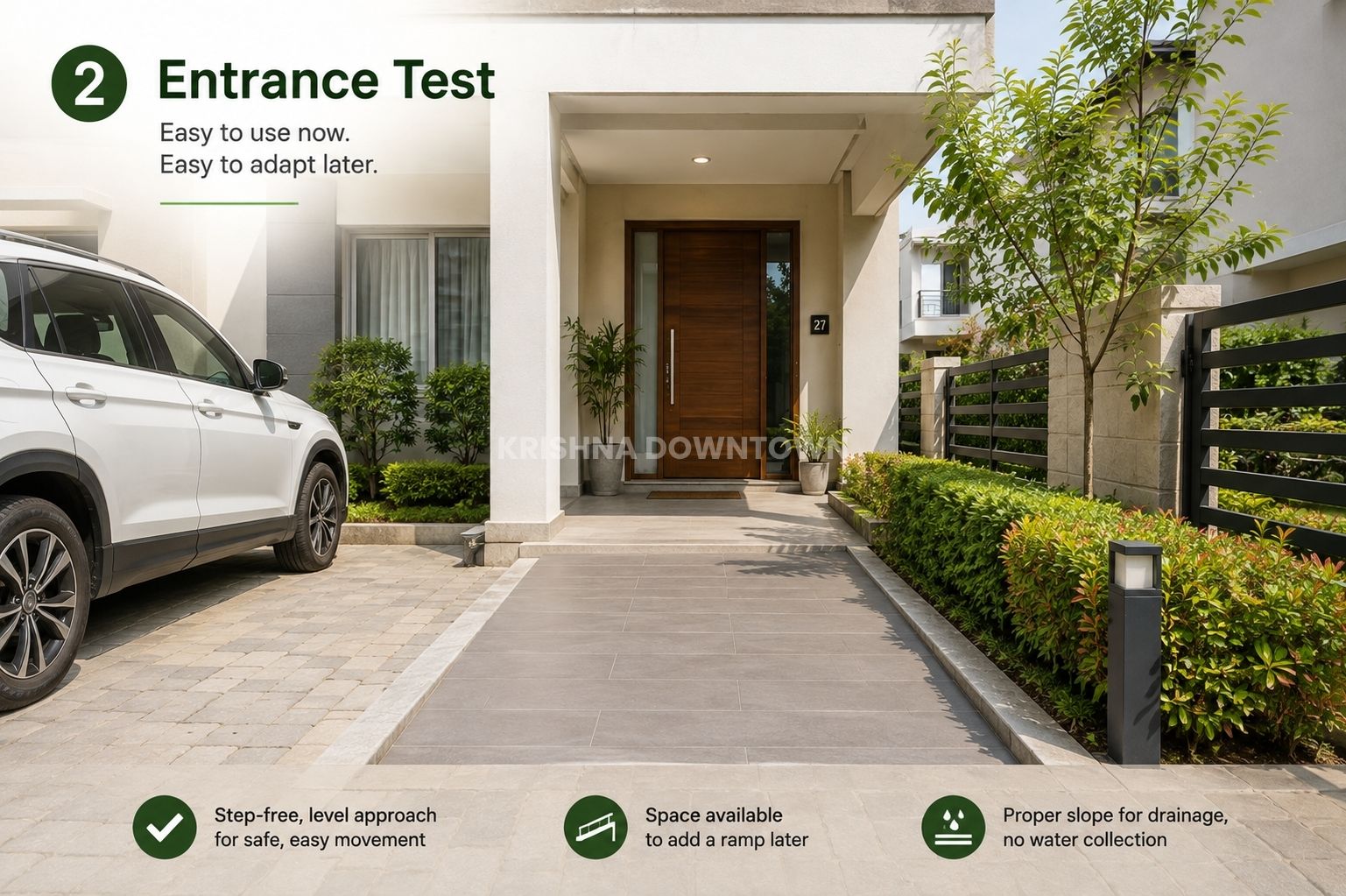
A beautiful front door can still be difficult if the approach has an abrupt step, a slippery finish, a high threshold or no space for a gradual ramp. Official Indian accessibility guidance emphasises level, slip-resistant movement and ramps designed to avoid water accumulation. A homebuyer does not need to turn every villa into an institutional-looking space; the goal is to see whether the entrance is easy to use now and easy to adapt later.
Glossy surfaces can look premium under showroom lighting, but the more important question is how the flooring behaves when wet, dusty or used at night. For a senior citizen friendly home, look for surfaces with practical grip, especially at bathrooms, balconies, utility areas, entry zones and outdoor paths.
Bathrooms deserve more attention than almost any other room in a senior-friendly villa. The issue is not only whether grab bars are installed. Look at entry width, floor grip, the wet/dry zone, shower threshold, toilet-side clearance, door swing, ventilation, lighting and whether future support bars can be fixed to structurally suitable surfaces.
A floor plan can show generous room sizes while the connections between rooms remain tight. A parent does not experience a home as separate rectangles; they experience the route from bed to bathroom, bedroom to dining room, living room to sit-out, and entrance to car. That is why accessible home design is as much about circulation as room size.
In a duplex villa, stairs may remain part of family life even if parents mainly use the ground floor. Inspect tread consistency, handrail continuity, landing space, lighting and whether the staircase feels comfortable when descending – not just ascending. Dramatic floating stairs may photograph well but can be less reassuring for some users.
Poor visibility can turn a small threshold or step into a bigger problem. During a site visit, inspect the villa in natural light and identify darker routes: staircase, bathroom approach, entrance, parking edge, utility space and the path from bedroom to bathroom at night.
Senior-friendly planning begins before the front door. A long or uneven route from parking, an exposed path during rain, a steep level change, or a tight car-door opening can make everyday arrivals unnecessarily difficult. This is especially relevant for a villa in Bhubaneswar, where monsoon rain and strong summer sun change how outdoor movement feels.
A parent-friendly home should not depend on sitting in one air-conditioned room all day. Check whether the bedroom and living areas receive fresh air, whether windows are easy to operate, whether harsh afternoon heat affects key rooms, and whether there is a shaded sit-out or green edge where parents can spend time outdoors comfortably.
A gated entrance is useful, but senior-friendly security is broader. Ask how visitors are verified, how an ambulance or emergency vehicle can reach the villa, whether internal roads remain clear, how the house number is identified, and how quickly family members can open the gate/door if help is needed.
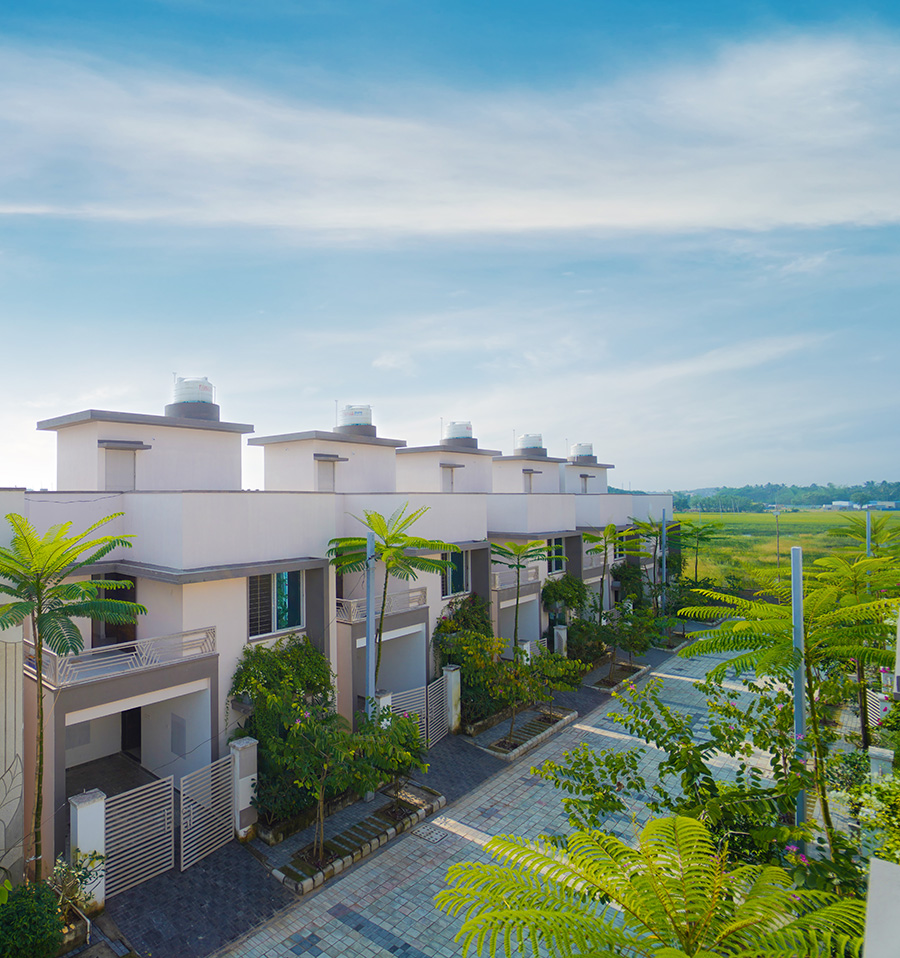
A home can be beautifully accessible inside and still feel isolating if parents cannot comfortably reach a walking area, sit outdoors, meet neighbours or access everyday services. A gated community in Phulnakhara should therefore be judged by the full living environment, not only the villa footprint.
A senior-friendly villa reduces unnecessary obstacles in everyday movement. Useful features include a ground-floor bedroom and bathroom, an adaptable entrance, practical floor grip, comfortable circulation, safe stairs, good lighting, easy parking-to-door access, ventilation and clear emergency access.
For many multigenerational families, a ground-floor bedroom is valuable because it can reduce dependence on stairs for essential daily routines. Buyers should also check whether a usable bathroom is located nearby.
Inspect floor grip, wet/dry zoning, shower threshold, door movement, lighting, ventilation, toilet-side clearance and whether support bars can be added securely if required. A specific mobility need should be reviewed by an appropriate professional.
They can be, provided essential daily living can happen comfortably without repeated stair use, or suitable lift/access provisions genuinely exist. The answer depends on the specific layout and the family member’s needs.
Not necessarily. The more important question is whether the entrance is level or easily adaptable. A low-obstacle approach helps many users and gives the family more flexibility if needs change.
Look beyond amenities. Check walking surfaces, lighting, places to sit, internal-road movement, security, emergency access and real travel time to healthcare, pharmacy, groceries and other everyday services.

Book a Personalized site visit to explore premium villas in Phulnakhara near Bhubaneswar
No Spam, We will only reach out for visit scheduling